
Vous contribuez ainsi à lamélioration de notre service. Maupassants stories are full of well-born or well-married womens attraction for the world of prostitution. It is an obscure desire, swathed in a passion for fabric wrapped around warmed bodies. Passing for a prostitute, after having watched one from her window, is the game played by the young Madame de Grangerie in Le signe The signal. The world of racy cabarets inspires great passion in the writers female characters. Henriette, the heroine of Imprudence from the Contes grivois, imagines End Page 149 that her husband Paul takes her to a racy cabaret where she would be mistaken for his mistress. In Bel-Ami, Madame de Marelle cannot wait to go to the Folies-Bergères, and when she enters this temple to pleasure, her fascination for the women there cannot be contained: Mme de Marelle ne regardait guère la scène, uniquement préoccupée des filles qui circulaient derrière son dos; et elle se retournait sans cesse pour les voir, avec une envie de les toucher, de palper leur corsage, leurs joues, leurs cheveux, pour savoir comment cétait fait, ces êtres-là. Madame de Marelle was not really looking at the stage, her sole concern was for the girls who walked around behind her back; and she would constantly turn around to see them, wanting to touch them, to feel the bodice of their dresses, their cheeks, their hair, so that she could figure out what these creatures were made of. The word homosexuality began to be used in the late 19 th century to designate a newly created concept, a type of identity, just as, for instance, a housewife or a prostitute in this period. Prior to this, there did not exist a specific category to define the sexual identity of a person attracted to their own sex. There were a number of derogatory terms used to describe homosexuals at that time such as pansy, for instance. These names are not just new labels for old realities: they point to a changing reality, both in the ways a hostile society labelled homosexuality, and in the way those stigmatized saw themselves. Weeks, 3 This new notion had its roots in the Hebraic and Christian traditions, and therefore had the concept of guilt deeply embedded in the experience of being a homosexual Weeks, 4. The fact that Raoule is the active, paying consumer in her first transaction with Jacques in the opening scene of Monsieur Vénus sets a symbolic precedent. Jacques is initially presented as a temporary stand-in for his absent florist sister, Marie Silvert, declaring to Raoule that he is there pour vous servir 14. Taken by his passivity and his feminine association with roses, she codifies him as un bel instrument de plaisir 19, his malleability seemingly a catalyst for the realisation of her sexual fantasies. As their relationship progresses and Raoule adroitly manipulates the vulnerable young man to the service of her desires, Jacques becomes increasingly objectified, ceding his body to the woman he now describes as his chère bienfaitrice 35 in a term that underscores not only commodification of the body but the control that results from financial power. As Laurence Porter suggests: Jacques is a poor working-class man whom Raoule buys 106. That said, the economic dynamics of the relationship entail more existential consequences that bear upon the gender identification of each protagonist. The narrator informs us that: I will let you be the judge of both proposals, if you are interested in these topics, as I hope you will be. It is important for historians of the 19th century, like myself, to strengthen the bonds with specialists in literature, and the NCFS colloquia are an excellent opportunity to do so. Caviness, Madeline H. October 1990. Reviews of Les Vitraux Légendaires de Chartres: Des Récits en Images. Jean-Paul Deremble, Colette Manhes Sermo Corporeus: Die Erzählung der Mittelalterlichen Glasfenster. Wolfgang Kemp Speculum. 65 4: 972975 :.. CS1 maint: refharv lévolut io n de l a mode masculine, empruntant et contribuant aux grands co urant s d es styles ve sti menta ires.  After the period of, the monarch ruled 418451 persecuted pimps, violence was often used against them, the maximum penalty being death. His grandson promulgated the in 506, one of its provisions was the prohibition of prostitution. A was the proscribed penalty. Under this code both pimps and prostitutes were included. Introduced the code to. To understand how homosexuality has been perceived in Great Britain since the 19 th century, it is important to note that homosexual sex acts remained a crime from 1885 to 1967 in that country. When the 1553 Buggery law was passed in England, even though persecution of sodomy moved from the religious domain into the legal domain, the reasons for persecution remained the same. This law had an impact on the perception of homosexual individuals in society, which will be discussed in later sections. In History of Sexuality Volume 1, Foucault traces how homosexuality never ceased to pose a problem in society: what evolved was the framework of persecution, from religious to legal to finally medical institutions. All found a way to state that homosexuality was unnatural and needed to be punished andor treated 1. 19th century: The Emergence of Homosexuality as a Type of Identity 1.1 Early Definitions of Homosexuality and the Wilde Trials There are some scholars who disagree with this view. For a discussion, see: Guerra, Francisco. The Pre-Columbian Mind. Burlington, Mass.: Academic Press, Inc, 1971. ISBN 0128410507; and Bancroft, Hubert Howe. The Native Races of the Pacific States of North America. 2 vols. New York: D. Appleton, 1875. For a discussion of the reliability of missionary vs. Secular accounts, see: Greenberg, David. The Construction of Homosexuality. Chicago: University of Chicago Press, 1990. ISBN 0226306283; and Tannahill, Reay. Sex in History. New York: Stein and Day, 1989. ISBN 0349104867 Description: Nineteenth-Century French Studies provides scholars and students with the opportunity to examine new trends, review promising research findings, and become better acquainted with professional developments in the field. Scholarly articles on all aspects of nineteenth-century French literature and criticism are invited. Published articles are peer reviewed to ensure scholarly integrity. This journal has an extensive book review section covering a variety of disciplines. Nineteenth-Century French Studies is published twice a year in two double issues, fallwinter and springsummer. 2020 Project MUSE. Produced by Johns Hopkins University Press in collaboration with The Sheridan Libraries. By narrating this possibility, by tying it to the unraveling of clothing, Nerval manages to fight against the pains and humiliations brought on by society. He creates the possibility of a common dream of equality and dignity.
 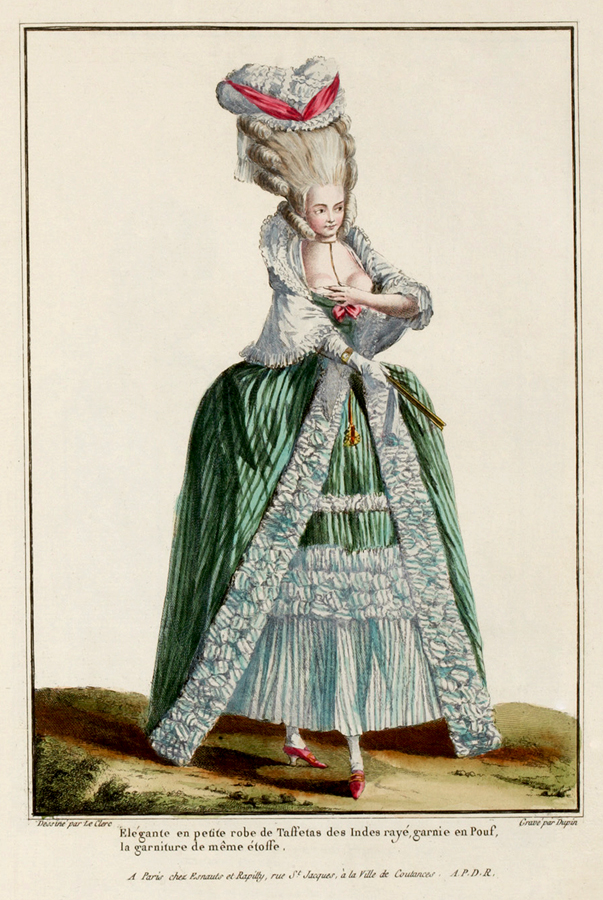 Cohen, Margaret. Women and Fiction in the Nineteenth Century. The Cambridge Companion to the French Novel. From 1800 to the Present Ed. Timothy Unwin. Cambridge: Cambridge University Press, 2000 5472. Print. Hommes attablés en compagnie de femmes légèrement vêtuesConstantin Guys 1802-1892 role in the develop me n t of m e ns fashion, borrowing from and contributing to mainst re a m clothing styles.
  Alors, elle, se penchant vivement, saisit sur sa toilette un verre Isambert; Decrusy; Taillandier 1830. In French Berlin-Le-Prieur. CS1 maint: refharv In 1358, the Grand Conseil of 1350-1364 echoing the necessary evil doctrine of 354-430 AD and 1225-1274 declared that les pécheresses sont absolument nécessaires à la Terre Sinners are an absolute necessity for the country. Prostitution remained confined to designated areas, as indicated in this decree in the reign of 1364-1380, by Hugh Aubriot, Provost of Paris in 1367, outlining the areas outside of which prostitutes would be punished according to the ordinance of Saint Louis; Comptes rendus Christine Bayles Kortsch, Dress Culture in Late Victorian Fiction: Literacy, Textiles, and Activism και σαγαπαω οσο ποτε ζητα μου αποψε οτι θες ΜΑΘΕΤΕ ΠΡΩΤΟΙ ΤΙΣ ΝΕΕΣ ΠΡΟΣΦΟΡΕΣ ΜΑΣ Sacred prostitution is often held to have been widespread across the,, but this has since been proven to have been more a construct of the 19th Century Western European mindset than a true representation of the facts. While there may well have been some religious prostitution centred around the temples of, the evidence suggests that the concept of the Sacred Marriage has in fact been misunderstood. It was previously believed to have been a custom whereby the king coupled with the high priestess to represent the union of with later called. It is far more likely, however, that these unions never actually took place but were simply used to embellish the image of the king. Many hymns that praise the king were written and, while some describe his coupling with the goddess, many also include details such as the king running 320 kilometres, offering sacrifices, celebrating at a festive, banqueting with the sun god Utu and receiving a royal crown from the god An, all in one day. As Sweet shows: No one, to the best of my knowledge, has been so wooden-minded to propose that human actors played the role of Utu and An at the banquet.